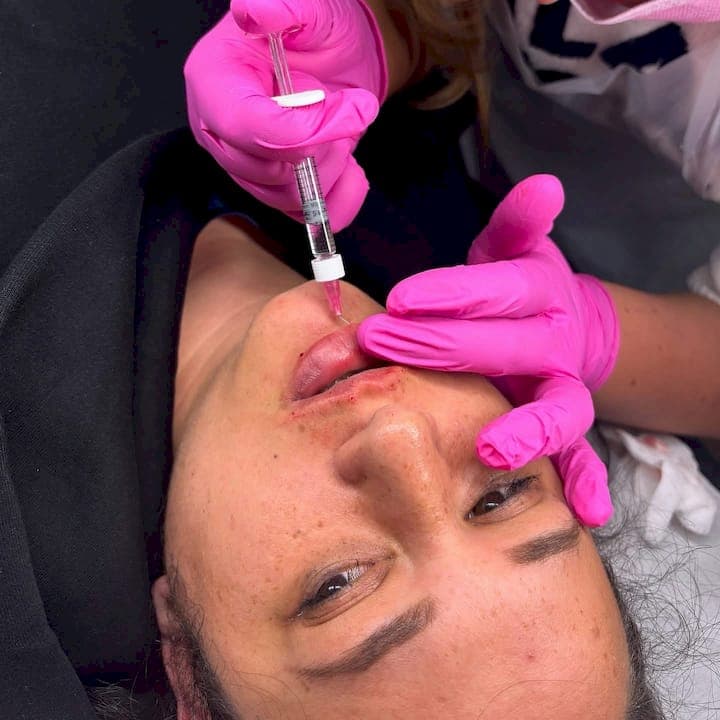

Choosing to train in aesthetic injectables without a clear, structured plan is one of the most common mistakes practitioners make in Ireland. The consequences go far beyond a failed assessment. Poorly structured training can put patients at genuine risk, expose you to professional liability, and damage a reputation you have worked hard to build. With Ireland lacking full regulation for injectables and growing calls for stricter standards, the pressure on practitioners to train correctly has never been greater. This guide gives you a clear, step-by-step roadmap for navigating injectables training in Ireland safely, compliantly, and with genuine confidence.
Table of Contents
Key Takeaways
| Point | Details |
|---|---|
| Follow regulations | Adhering to Irish legal and professional standards protects both you and your clients. |
| Quality over speed | Choose in-depth, accredited training for lasting competence, not shortcuts. |
| Patient safety first | Always embed safety checks and know your emergency protocols inside out. |
| Document everything | Maintain robust records of training, supervision, and procedures for compliance and reputation. |
Understanding Ireland’s regulatory framework
Before you book a single training day, you need to understand the legal landscape you are operating in. Ireland’s regulatory environment for injectables is still evolving, but the current position from the Irish Medical Council is clear. Only registered doctors & dentists may administer botox injectables under Irish Medical Council regulations. This is not a grey area, its the law. all other treatments including dermal fillers & injectables are open to non medics to train in.
What does this mean in practice? It means that your training provider must be able to demonstrate that their programme aligns with these professional standards.
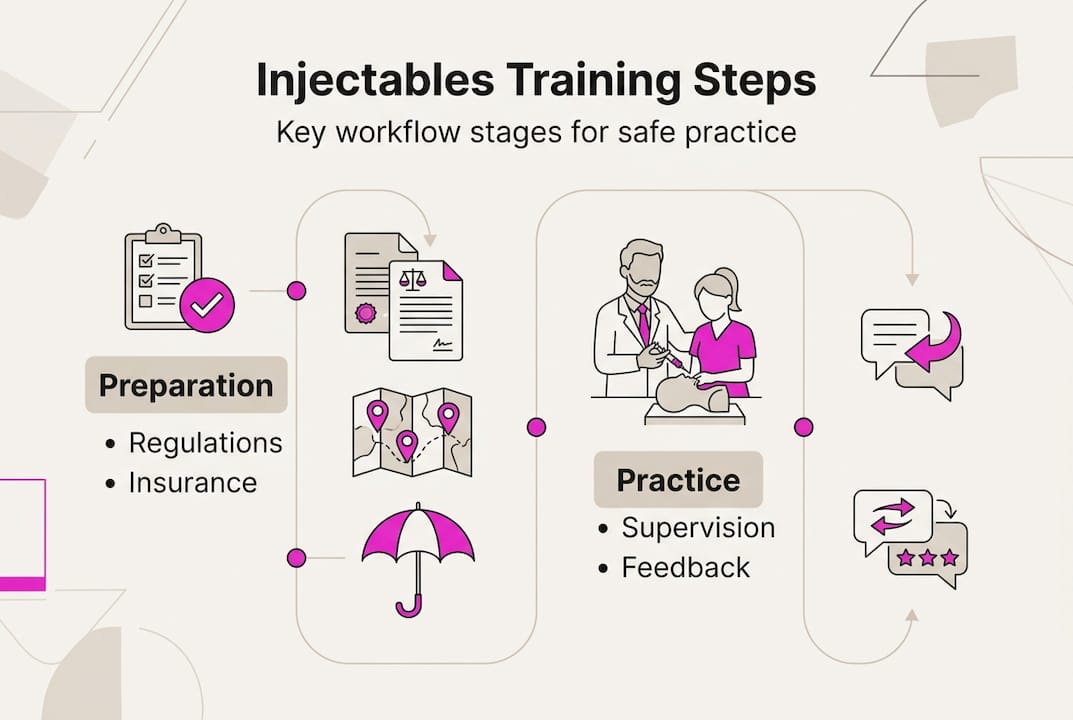
Key documentation you should have in place after training includes:
-
Valid indemnity insurance covering aesthetic procedures
-
Records of all supervised clients and patient outcomes
-
Certificates from accredited training providers
You can see how structured, supervised training looks in practice by browsing our training gallery or reading about the journeys of our past students. Real-world evidence of competence matters, both to regulators and to your future clients.
Beyond paperwork, the right mindset matters enormously. The best trainees arrive curious, not overconfident. They ask questions, take notes, and treat every supervised session as a learning opportunity rather than a box-ticking exercise.
Here is what you should prepare before your first training day:
-
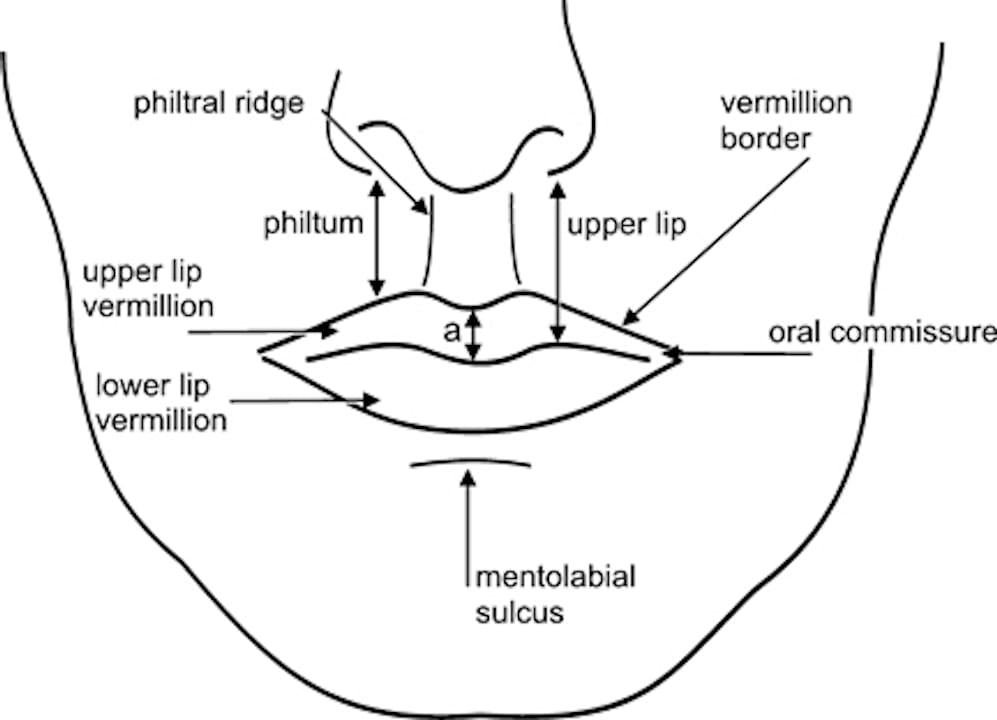
Study facial anatomy, particularly vascular structures, in advance
-
Research your training provider thoroughly, including reading student testimonials
Step-by-step injectables training workflow
With your prerequisites confirmed, you can move into the structured training journey itself. A well-designed injectables programme follows a logical progression that builds both knowledge and practical confidence at every stage.
Here is the core workflow you should expect from any reputable training provider:
-
Induction and orientation — Review of regulatory requirements, course structure, and safety expectations.
-
Theory and anatomy — Detailed study of facial anatomy, product pharmacology, contraindications, and patient assessment protocols.
-
Practical demonstration — Trainer-led demonstrations on live models, with close observation of technique, product placement, and patient communication.
-
Supervised clinical practice — You perform procedures under direct supervision, receiving real-time feedback on technique and safety.
-
Competence assessment — Formal evaluation of your practical skills, documentation habits, and ability to manage adverse events.
-
Post-course review — Follow-up support, portfolio building, and access to ongoing mentorship.
Typical training emphasises supervised practice and protocol adherence to prioritise patient safety above speed or volume of procedures.
| Training format | Duration | Supervision model |
|---|---|---|
| One-to-one intensive | 1 to 3 days | Direct, continuous |
| Blended (theory online, practical in-person) | 1-2 days | Scheduled sessions |
| Group classroom | 1 to 2 days | Shared, limited, not reccommended |
One-to-one training consistently produces stronger outcomes because feedbac
k is immediate and personalised. You can explore the full training pathway overview to understand which format suits your current level and goals, then enrol on courses when you are ready.
Pro Tip: The biggest workflow bottleneck for most trainees is the gap between theory and first supervised practice. Prepare by watching technique videos and reviewing anatomy diagrams the night before your practical day.
Critical safety protocols and complications management
A structured workflow means nothing if safety is treated as an afterthought. Every injectable procedure carries risk, and your ability to recognise and respond to complications quickly is what separates a competent practitioner from a dangerous one.
Routine safety checks before every procedure should include:
-
Full medical history and contraindication screening
-
Allergy confirmation, particularly to lidocaine and hyaluronic acid products
-
Informed consent documentation, signed and dated
-
Aspiration technique review where clinically indicated
-
Emergency kit check
Vascular occlusion is the most serious acute complication in filler treatments. Early signs include blanching, mottling, or sudden pain at the injection site. If you suspect occlusion, follow your escalation protocol. Knowing how to manage complications before they happen is not optional; it is a core competency.
Pro Tip: Keep a laminated emergency protocol card in your treatment room. In a high-stress situation, having a clear visual checklist prevents critical steps from being missed.
Understanding why strict protocols matter is not just about compliance. It is about building the kind of practice that clients trust and return to.
Recommended vs non-recommended training routes
Not all injectables training is created equal, and the difference between a well-structured programme and a fast-track course can have serious consequences for your patients and your career.
Group courses lack endorsement and are criticised by regulators for creating patient safety risks.
Recommended training routes:
-
Accredited programmes aligned with Irish standards
-
One-to-one formats with direct supervision
-
Courses that include post-training mentorship and competence review
-
Providers with verifiable track records and published student outcomes
-
Training that covers complications management, not just technique
Non-recommended approaches:
-
Group courses with no follow-up supervision
-
Online-only programmes with no practical component
-
Courses that do not require proof of professional competance
-
Providers who cannot demonstrate regulatory alignment
-
Training that skips anatomy, contraindications, or emergency protocols
The long-term implications of choosing the wrong route are significant. Practitioners who train through non-accredited providers often find themselves unable to obtain adequate insurance, excluded from professional networks, and vulnerable to complaints or regulatory action. The regulatory viewpoint is clear, and the professional consequences of ignoring it are real.
Choosing an accredited provider is not just about ticking a compliance box. It is about building a practice on a foundation that will hold up under scrutiny. Explore the benefits of accredited courses to understand what genuine quality training looks like.
Your next step: expert-led injectables training in Ireland
You now have a clear picture of what structured, compliant injectables training looks like in Ireland. The next step is finding a provider who can deliver it.
At Pro Training Aesthetics Academy, every programme is built around one-to-one learning, live model practice, and ongoing mentorship that does not stop when your course ends. Our internationally accredited courses are designed to meet Irish regulatory expectations while giving you the practical confidence to treat real clients from day one. Enrol now to take the next step in your aesthetics career, or hear from past students who have already made the move. You can also see our courses in action through our training gallery, where real results speak for themselves.